
Ice on an AC line is usually caused by restricted airflow, low refrigerant, or a dirty air filter. If left untreated, a frozen AC pipe can reduce cooling performance and eventually damage your compressor.
Here’s how to identify the cause, what you can safely check yourself, and when it’s time to call an HVAC professional in Bloomington and nearby communities, including Richfield, Eden Prairie, and Burnsville.
Why Is My AC Line Frozen?
A frozen AC line is usually caused by restricted airflow, low refrigerant, or a dirty air filter. When your air conditioner can’t move enough warm air across the evaporator coil, the coil gets too cold, and moisture freezes instead of draining away.
If you notice ice on your AC line, turn the system off, let it thaw completely, and check the air filter and vents. If the line freezes again, it’s time to schedule a professional AC inspection to prevent more costly damage.
What Causes an AC Line to Freeze in Minnesota Summers?
Your AC system works by moving refrigerant through a coil, absorbing heat from your indoor air. That process depends on steady airflow across the coil. When something disrupts that airflow, the coil gets too cold, and moisture in the air freezes on the line instead of draining away as condensation.
Minnesota’s late-summer stretch makes this worse. Dew points in the Twin Cities regularly climb into the 60s and 70s from July through early September, which means the air holds more moisture than it does in a typical Midwest summer.
More moisture means more material for that ice to form from, and it means your system works harder to begin with. A unit that’s already stretched thin freezes up faster than one running in dry conditions.
The three most common causes:
- A dirty air filter. This is the number one cause we see on service calls. A clogged filter chokes airflow across the coil, and the coil ices over within hours.
- Low refrigerant. If your system is low on refrigerant, usually from a slow leak, pressure inside the coil drops below what’s needed to keep it from freezing.
- Blocked airflow elsewhere. Closed vents, furniture blocking a return, or a dirty blower wheel can starve the system the same way a dirty filter does.
What to Do If Your AC Line Freezes
Before you call anyone, there are a few things worth checking on your own.
Turn the system off completely, including at the thermostat, and switch the fan to “on” so air keeps moving without cooling. This lets the ice melt without adding more moisture to the coil. It usually takes a few hours, sometimes overnight, for a heavily frozen line.
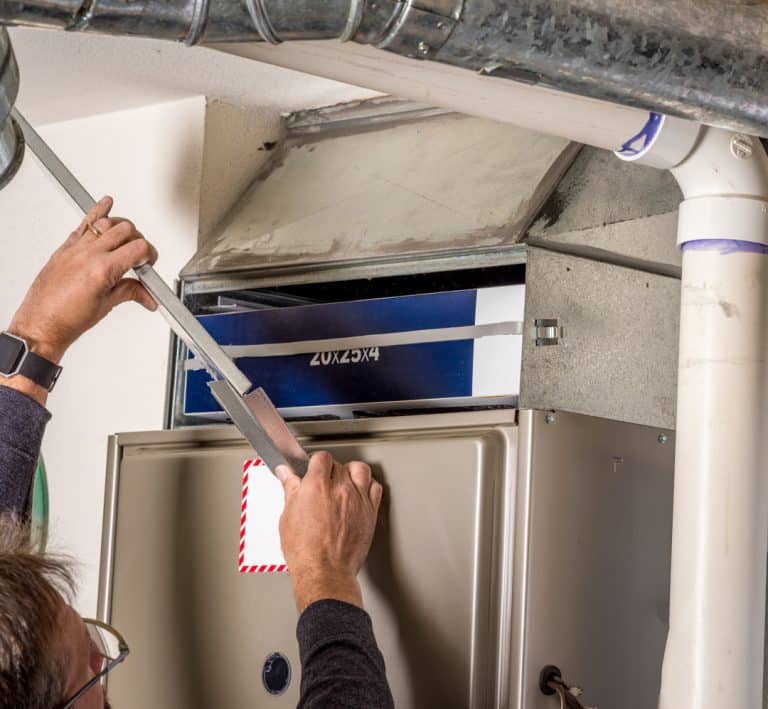
While it thaws, check your filter. If it’s gray, packed with dust, or you can’t remember the last time you changed it, that’s likely your answer. A basic filter should be swapped every 60 to 90 days, sooner if you have pets or run the system constantly through a Minnesota summer.
Walk around your house and check that vents aren’t blocked by rugs, furniture, or closed dampers. Return air needs a clear path just as much as supply air does.
Once everything’s thawed and the filter’s clean, turn the system back on and watch it for the next hour. If the line starts icing again, the problem isn’t the filter.
When It’s Time to Call a Professional
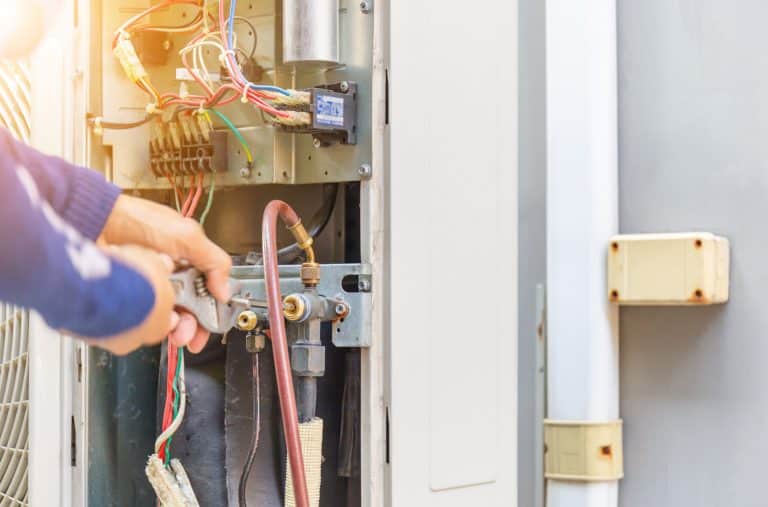
If the ice comes back after a clean filter and clear vents, you’re likely looking at low refrigerant or a mechanical issue that needs a trained eye. Refrigerant systems are sealed for a reason. Handling them requires EPA certification, and adding refrigerant to a system that’s leaking just delays the real fix.
That’s the kind of problem our technicians run into constantly this time of year. One recent customer, Selena, called us out for what she thought was strictly an AC issue.
Our technician Trace walked through every step with her before finding the real cause. “It wasn’t the AC unit and was an electrical issue but he checked everything off before showing me where issue was,” she said. “I will def use this company for future needs.”
That’s the process we run every time: rule out the simple stuff first, then diagnose the real problem instead of guessing. Our licensed HVAC technicians repair and maintain all major air conditioning brands throughout Bloomington and the Twin Cities.
Our trucks carry the parts needed for most AC repairs, which is why we complete about 93% of jobs on the first visit. You’ll get an upfront price before any work starts, and we only recommend what your system actually needs.
How to Prevent Your AC Line From Freezing Again
Frozen AC lines can be prevented with routine maintenance and good airflow. These simple steps can help keep your system running all summer efficiently.
- Change filters every 1–3 months.
- Keep supply vents open.
- Schedule annual AC maintenance.
- Keep outdoor units free of debris.
- Replace worn ductwork.
- Don’t ignore weak airflow.
Frozen AC Line FAQs
Is it safe to run my AC while the line is frozen? No. Running the system while it’s iced over can push liquid refrigerant back into the compressor, which is one of the most expensive parts to replace. Shut it off and let it thaw first.
How long does it take for a frozen AC line to thaw? Usually a few hours with the fan running and the compressor off. A heavily iced coil can take overnight.
Can I just add refrigerant myself? No. Refrigerant handling requires EPA certification, and adding refrigerant to a leaking system doesn’t fix the leak. It just masks the symptom until the next freeze-up.
Why does this happen more in late summer than earlier in the season? Humidity peaks in the Twin Cities from late July through early September, and AC units that have run hard all summer are more likely to have airflow or refrigerant issues that finally show up.
Call Our Expert Team
Whether you’re in Bloomington, Richfield, Eden Prairie, Burnsville, or throughout the south Twin Cities, frozen AC lines are one of the most common late-summer HVAC service calls.
We offer same-day service when available and free estimates on new systems if yours is due for a replacement.