Your thermostat says the heat is on, but the air coming from your vents feels cold. Before assuming your furnace needs a major repair, there are a few things you can safely check yourself.
A furnace blowing cold air can have a simple cause, such as the thermostat fan setting or a dirty air filter. It can also point to an ignition problem, airflow restriction, safety control, condensate issue, or another furnace component that requires professional service.
Here’s what to check first and when it’s time to call Alpha Plumbing, Heating & Cooling.
Check the Thermostat First
Start with the thermostat. Make sure:
- The system is set to Heat
- The temperature is set higher than the current room temperature
- The fan is set to Auto, not On
When the fan is set to On, the blower can continue running between heating cycles. That means you’ll feel room-temperature air from the vents even when the furnace isn’t actively heating.
Set the fan to Auto and give the system a few minutes to complete a heating cycle.
If the air is still cold after the furnace has had time to run, continue with the checks below.
Check the Furnace Filter
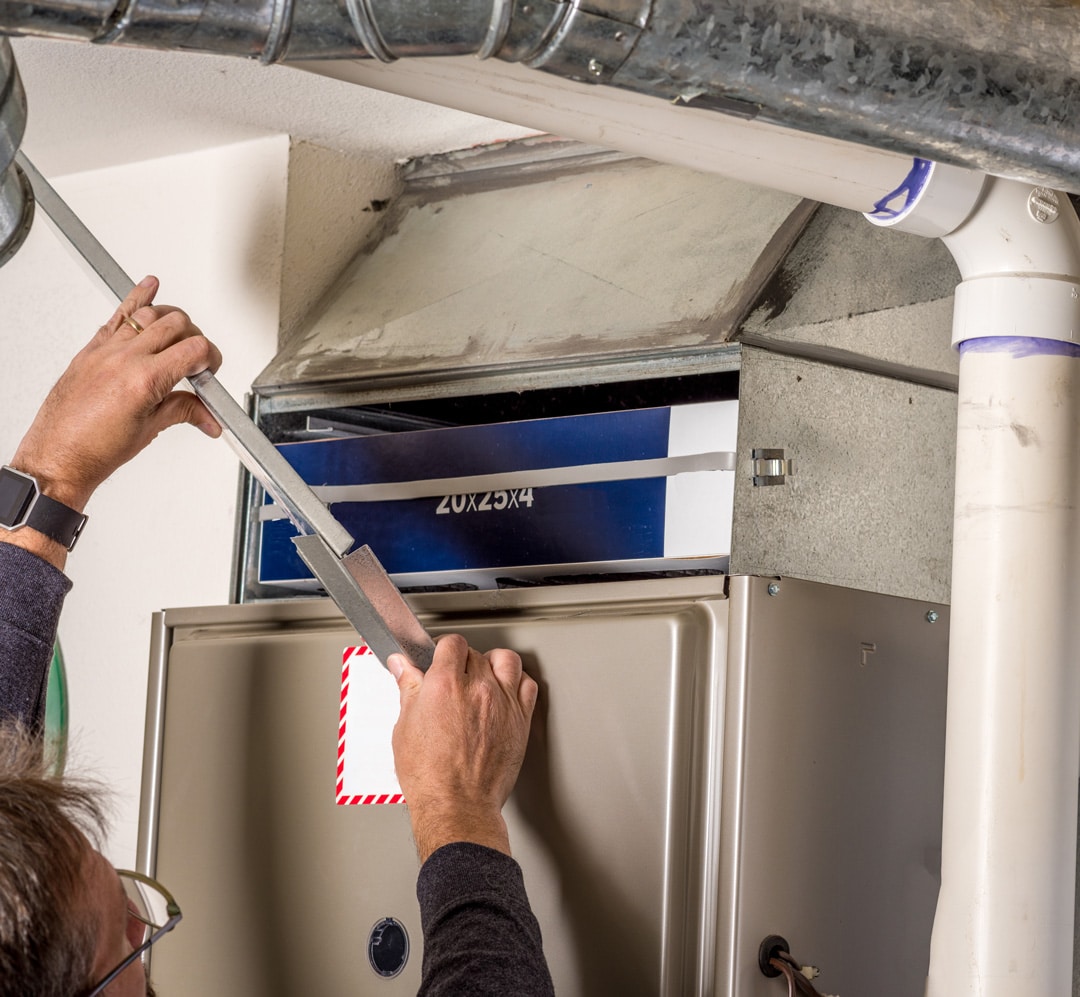
A dirty air filter can restrict airflow through the furnace. In some systems, restricted airflow can cause the furnace to overheat and trigger a safety control that shuts the burner off while the blower continues running.
The result can be a furnace that appears to be running but is blowing cool or room-temperature air.
Check the filter and replace it if it’s visibly dirty or clogged. How often a filter needs changing depends on the filter type, home, pets, indoor air quality, and other factors, so follow the filter manufacturer’s recommendations and check it regularly during heating season.
If replacing the filter doesn’t solve the problem, don’t keep running the furnace while trying to diagnose internal components. A technician can determine whether an airflow restriction or another problem is causing the shutdown.
Check the Furnace Power Switch
Your furnace usually has a nearby electrical disconnect or switch that looks similar to a regular light switch.
Make sure it hasn’t accidentally been switched off.
If the furnace has no power, the thermostat may still appear to be working even though the heating system isn’t operating.
If the switch is on but the furnace still isn’t running correctly, the problem may require professional diagnosis.

Check the Outdoor Furnace Vents for Snow and Ice
Many high-efficiency furnaces use PVC pipes that terminate outside the home for intake and exhaust.
During a Minnesota winter, snow and ice can accumulate around these openings. A blocked vent can interfere with furnace operation and, depending on the system, cause a safety shutdown.
Look outside for visible snow, ice, leaves, or other debris blocking the furnace’s intake or exhaust openings. Keep the area around the vents clear.
The U.S. Consumer Product Safety Commission recommends clearing snow from exterior vents serving fuel-burning appliances because blocked venting can contribute to carbon monoxide hazards.
If the vent is blocked with ice or you suspect a venting problem, don’t disassemble the system. Have a qualified technician inspect it.
Rule Out a Gas Supply Issue
Before assuming the furnace itself is broken, confirm gas is actually reaching it. Check that the shutoff valve on the gas line is fully open, and if you have a natural gas meter, make sure it hasn’t been shut off for any reason.
Try another gas appliance in the house, like a stove or water heater. If nothing gas-powered is working, the problem is upstream of your furnace, and you’ll want to call your gas utility, not an HVAC company.
Leaky Ductwork Loses Heat Before It Reaches You
Some homes in the Bloomington and greater Twin Cities area still have original ductwork from decades ago, and joints separate or crack over time.
When that happens, heated air escapes into the attic or crawlspace before it ever reaches your vents, so what does make it to the register feels lukewarm or cold. Duct leaks don’t always show up as an obvious problem. Often it just looks like weak, inconsistent heat in certain rooms while others stay comfortable.
Check the Furnace’s Diagnostic Code
Many modern furnaces have an LED indicator that flashes a repeating pattern when the system detects a fault.
If your furnace has a viewing window, note the flashing pattern without opening the furnace cabinet. The furnace manual may explain what the code means.
Some codes indicate relatively simple problems, while others can point to pressure, ignition, airflow, venting, or control issues.
If you see an error code you don’t understand, give an HVAC technician the exact code. It can help them narrow down the problem before they arrive.
Why Does a Furnace Blow Cold Air During a Minnesota Cold Snap?
Minnesota’s first major cold snap often reveals furnace problems that went unnoticed during the warmer months.
A furnace may sit unused for much of the spring and summer before suddenly running for hours each day. Problems with ignition, airflow, electrical components, condensate drainage, or venting can become apparent when the system is put under heavy demand.
Snow and ice can also affect exterior furnace vents during winter. Keeping those areas clear and scheduling regular furnace maintenance can help reduce avoidable problems. The CPSC recommends professional annual inspection and maintenance of fuel-burning heating systems.
When to Call Alpha Plumbing, Heating & Cooling
If you’ve checked the thermostat setting, swapped the filter, and confirmed gas is reaching the house and you’re still getting cold air, it’s time to call in a technician.
Our team manages same-day furnace diagnostics across Bloomington and the greater Twin Cities, and we can usually identify and fix the problem during that first visit. Visit our heating and cooling service page to schedule, or give us a call directly.
We’re locally owned and independent, with upfront pricing on every job and a one-year warranty on our work. If you want priority scheduling and discounts year-round, ask about our Royalty Home Club membership.
FAQs
Why is my heater blowing cold air even though the thermostat is set to heat? The most common reason is the fan setting. If it’s set to “on,” the blower runs continuously and blows unheated air between burner cycles. Switching it to “auto” fixes this in most cases.
My pilot light keeps going out. What’s causing that? A dirty or misaligned thermocouple is the usual cause. It’s a small safety sensor that shuts off gas flow if it doesn’t detect a steady flame, and it can be triggered by drafts, dirt buildup, or a worn part.
Why won’t my furnace ignite at all? This is often a failed hot surface igniter or a flame sensor coated in residue from sitting idle over the summer. Both are common after several months of no use.
The thermostat is on and calling for heat, but nothing’s happening. What should I check first? Confirm the furnace switch (it looks like a light switch, usually near the unit) is turned on, check that the filter isn’t clogged, and make sure the gas valve is open. If all of that checks out, it’s likely a component failure that needs a technician.
Do you offer same-day furnace repair in Bloomington? Yes. We provide same-day diagnostics and repair across Bloomington and our full Twin Cities service area, including St. Paul, Minneapolis, Eden Prairie, and Woodbury.