The first single-digit night of the season is when the calls start. The vents blow cool air. The outdoor unit steams like a kettle. The thermostat reads “Aux,” and nobody knows what that means.
Most of this is normal. Some of it isn’t. Here’s how to tell the difference before you pay for a service call you don’t need, or skip one you do.
Why Your Heat Pump Feels Like It’s Blowing Cool Air
A heat pump delivers air at roughly 90 to 100°F. A gas furnace delivers air at 120 to 140°F. Your skin sits near 98°F, so heat pump air can feel lukewarm against your hand even when the system works perfectly.
| Heat pump | Gas furnace | |
| Typical air at the vent | 90 to 100°F | 120 to 140°F |
| How it feels | Mild, steady | Hot, in bursts |
| Run pattern | Long, low cycles | Short, hot cycles |
Judge the system by your house, not your hand. If your home holds the thermostat setting, your heat pump works. If the temperature keeps sliding below it, something’s wrong. That’s the point to search “heat pump not blowing hot air” and keep reading.
Defrost Mode: Why Your Outdoor Unit Steams
When it’s cold and damp, frost builds on the outdoor coil. The heat pump reverses its cycle for a few minutes, usually five to ten, and melts the frost. You’ll see steam rise from the unit. You may feel cooler air indoors for a short stretch.
That’s defrost mode, and it’s normal. Bloomington sees plenty of conditions that trigger it, from wet snow to freezing fog.
Call a technician if the unit defrosts back-to-back all day, or if ice never clears and builds into a solid shell. A failed defrost control board, a bad sensor, or a stuck reversing valve usually causes it. Don’t chip at the ice with a screwdriver. The coil fins bend, and the refrigerant lines puncture easily.
Auxiliary Heat vs. Emergency Heat
These two settings get confused all the time.
Auxiliary heat turns on by itself. When the temperature outside drops below your system’s balance point (the temperature where the heat pump can’t keep up alone), backup heat joins in. That backup is electric resistance strips or, in a dual-fuel setup, a gas furnace. You’ll see “Aux” on the thermostat on a cold January morning. That’s fine.
Emergency heat is a manual switch. It shuts off the heat pump and runs only the backup. Use it when the outdoor unit has stopped working, such as when it’s iced over or making a grinding noise. It keeps your home warm until a tech arrives.
Don’t leave it on EM to “help” the system. Electric backup costs more to run than the heat pump does. The U.S. Department of Energy says cold-climate heat pumps can cut household energy use by up to 40%, with the biggest savings in homes that heat with electric resistance or fuel oil. Running emergency heat gives that savings away.
If you see Aux running at 45°F, though, that’s a red flag. Call us.
Will a Heat Pump Keep Up in Bloomington?
Bloomington nights regularly fall into the single digits, and some fall below zero. The balance point matters here more than in most places. Many systems reach theirs somewhere between 25 and 35°F, depending on the equipment and how well your home holds heat.
Equipment age makes a big difference. Many older heat pumps lose output fast below about 35°F. Modern cold-climate models use variable-speed compressors, and some manufacturers rate them to produce heat at -13°F.
Check your outdoor unit’s nameplate for the model number. Look for a “cold climate” label, or check whether the model appears on the Northeast Energy Efficiency Partnerships (NEEP) cold-climate product list. If it doesn’t, ask a pro whether your unit suits a Minnesota winter. Sizing matters too. An undersized unit runs nonstop and still leaves rooms cold.
Heat Pump vs. Furnace in a Minnesota Winter
Neither wins every night. A heat pump costs less to run through fall and spring. A gas furnace hits harder when the temperature drops below zero.
| Best for | Weak spot | |
| Heat pump | Mild and cool days, summer cooling | Deep cold, if not rated for it |
| Gas furnace | Subzero nights | No cooling, higher fuel use on mild days |
| Dual fuel | Both | Higher upfront cost |
Many Bloomington homeowners pair the two. The heat pump handles most of the season. The furnace takes over when the temperature falls below a set point. You get low bills in October and reliable heat in January.
Troubleshooting Checklist Before You Call Alpha Plumbing
Run through these six steps first. They take about 15 minutes.
- Confirm the thermostat is in heat mode and set above the room temperature.
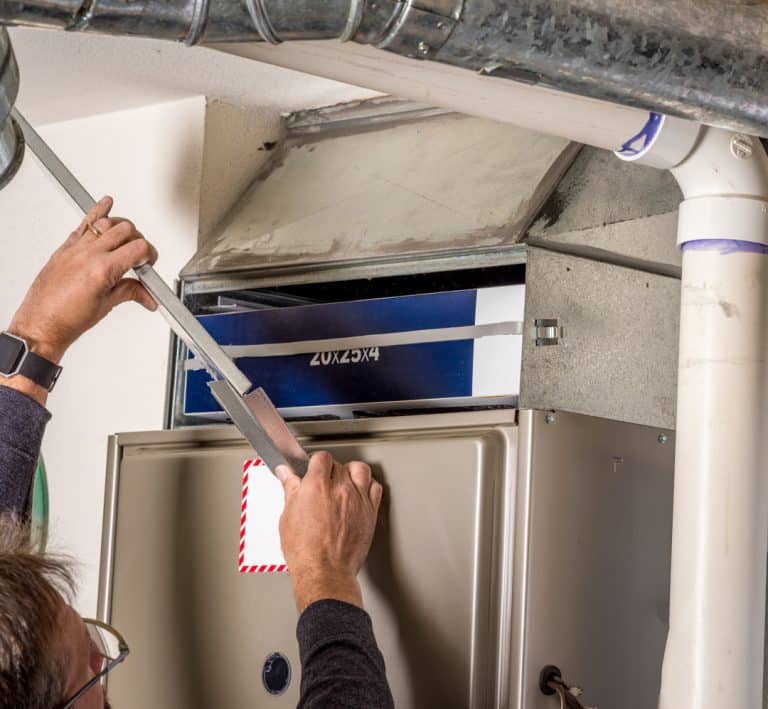
- Replace a dirty air filter. A clogged filter chokes airflow.
- Clear snow, ice, and leaves from around the outdoor unit. Keep about two feet of space on every side.
- Check that the outdoor fan spins freely, with the power off.
- Make sure the breaker hasn’t tripped.
- Watch the unit through one full defrost cycle. If it clears in ten minutes, relax.
Still cold? Call a technician.
Heat Pump Repair and Installation in Bloomington
Alpha Plumbing, Heating & Cooling repairs, maintains, and installs heat pumps across Bloomington and the surrounding area. Our technicians find the cause, explain it in plain terms, and fix it. Every new heating and cooling system comes with a free estimate.
If your heat pump stops heating on a freezing night, call us for emergency service.
Frequently Asked Questions
Do heat pumps work in Minnesota?
Yes, if the unit suits the climate. Cold-climate heat pumps keep producing heat well below freezing. Older or undersized units struggle. Pairing a heat pump with a gas furnace covers the coldest nights.
Why is my heat pump blowing cold air?
It may be in defrost mode, which lasts five to ten minutes and passes on its own. It may also be that heat pump air runs cooler than furnace air. If the air stays cool and your house keeps losing heat, you may have a refrigerant leak, a failed reversing valve, or a dirty filter.
When should I use emergency heat?
Use it only when the outdoor unit stops working, such as when it’s iced over or damaged. It runs on backup heat alone and costs more per hour. Switch back to normal heat once a technician fixes the problem.
How long does defrost mode last?
Usually five to ten minutes. Defrost cycles can repeat in wet or freezing weather. If the unit never finishes a cycle, or ice stays on the coil, call for service.