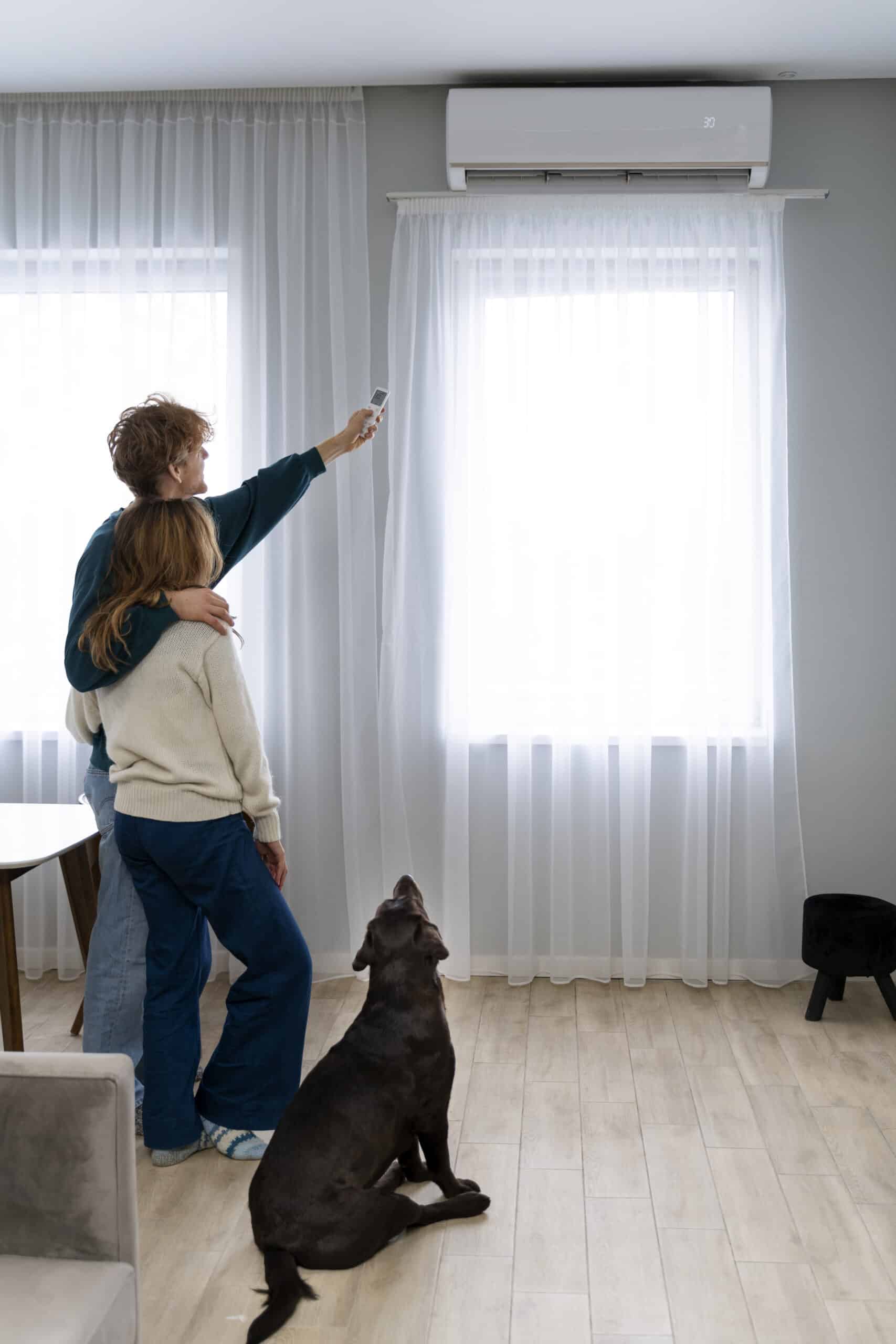
Your air conditioner is running, the temperature says 72, but the air still feels thick and sticky.
That’s a humidity problem, and it’s more common than most Minneapolis-area homeowners realize, especially during July and August when outdoor humidity regularly tops 80%.
Cooling and dehumidifying are related, but they’re not the same thing, and your AC can fail at one while managing the other just fine.
Your AC Might Be Too Big for Your House
This is one of the most common and most misunderstood reasons your home still feels humid. When your AC is too large for your space, it cools the air quickly but shuts off before removing enough moisture.
What’s happening with an oversized AC:
- Short run cycles: The system cools the home fast, then shuts off before dehumidifying
- Short-cycling: Frequent on-and-off cycles that reduce overall efficiency
- Limited moisture removal: The evaporator coil doesn’t stay cold long enough to pull humidity from the air
- Cool but sticky air: Your thermostat hits the target temperature, but the humidity remains high
In places like the Twin Cities, this is especially common in older homes that received oversized replacements years ago. If your system reaches temperature in just a few minutes but your home still feels damp, sizing could be the issue.
A professional load calculation can confirm whether your AC is properly matched to your home or working against it.
Dirty or Frozen Evaporator Coils Reduce Dehumidification
The evaporator coil is where moisture actually gets removed from the air. When it’s coated in dust and grime, or worse, frozen over from poor airflow, it can’t do that job well.
A dirty coil is also one of the leading causes of reduced cooling capacity overall, so if your system seems to be working but your house feels both warm and muggy, the coil is worth checking before anything else.
Frozen coils are usually a symptom of something else: a clogged filter, low refrigerant, or blocked return air vents. Replacing a filter every 1 to 3 months, depending on your home and whether you have pets, is one of the simplest ways to keep airflow healthy and avoid this entirely.
Your Home Is Letting Humidity In
Older homes in Bloomington, Eagan, and Roseville often have air sealing issues that let humid outdoor air pour in through gaps around windows, doors, attic hatches, and ductwork. If your AC is constantly fighting incoming humidity, it’ll never catch up, no matter how well the equipment is working.
Duct leaks are a particular issue. When return ducts pull unconditioned air from a crawl space or attic, that air tends to be significantly more humid than what’s already inside your home.
The system circulates it, cools it slightly, but doesn’t have the run time to strip the moisture out. An HVAC inspection that includes duct evaluation can catch this quickly.
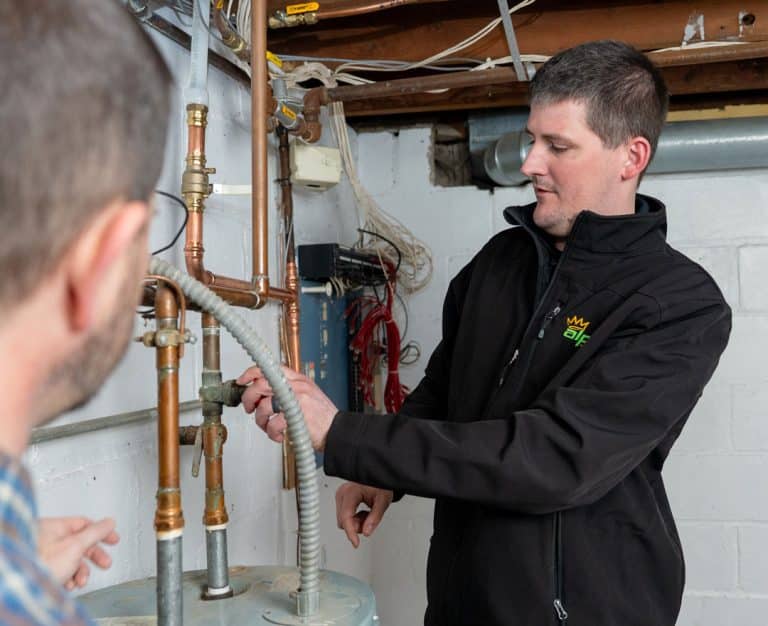
Soulita, a local customer, described a service visit that started with a free tune-up and uncovered something bigger:
“Found out we have issues with our furnace and was needing a replacement. Jacob, the technician, was professional, knowledgeable, and took the time to explain everything clearly. I appreciate the attention to detail and the care taken to ensure everything was working safely.”
That kind of upfront diagnosis, where the technician walks you through exactly what’s happening and why, is what prevents small problems from turning into expensive ones.
A Whole-Home Dehumidifier May Be the Right Answer
If your AC is properly sized, the coils are clean, and your home is well sealed, but humidity is still an issue, a whole-home dehumidifier may be the missing piece.
Why a whole-home dehumidifier works:
- Runs independently of your AC: Removes moisture even when the cooling system isn’t running
- Controls overnight humidity: Keeps levels stable when temperatures drop but moisture stays high
- Covers the entire home: Integrated into your HVAC system for consistent, whole-house comfort
- Maintains ideal humidity levels: Keeps indoor air around 45–50%, where most people feel comfortable
- No manual upkeep: Unlike portable units, there’s no need to empty water tanks
Portable dehumidifiers can help in small areas, but they’re not a long-term solution for whole-home comfort. If humidity is a constant issue, a ducted system gives you consistent control without the daily hassle.
Talk to Alpha About Your Home’s Humidity
Alpha Plumbing, Heating & Cooling serves Minneapolis, St. Paul, Eden Prairie, Woodbury, Burnsville, Eagan, Minnetonka, Coon Rapids, and communities across the Twin Cities metro.
If your home still feels humid with the AC running, don’t guess at the cause.
Call Alpha Plumbing, Heating & Cooling at 612-274-0277 or request service online.
Same-day appointments are available when scheduling allows. So you can get clear answers and fix the issue quickly, and they complete about 93% of repairs on the first visit.
AC FAQs
Why does my house feel humid even when the AC is running?
Usually, it comes down to one of three things: an oversized unit that short-cycles, a dirty or restricted evaporator coil, or air infiltration bringing outdoor humidity inside faster than the system can handle it.
What’s a comfortable indoor humidity level?
Most people feel best between 40 and 50 percent relative humidity. Above 55 percent, you’ll notice it in the air and start seeing effects on wood floors, furniture, and air quality.
Can my AC filter affect humidity?
Yes. A clogged filter restricts airflow over the evaporator coil, which reduces its ability to cool and dehumidify. It can also cause the coil to freeze, making both problems worse.
How do I know if my AC is the right size?
A Manual J load calculation done by a licensed HVAC technician is the proper way to determine the right system size for your home’s square footage, insulation, and layout.
Does Alpha install whole-home dehumidifiers?
Yes. Alpha offers whole-home dehumidification as part of their indoor air quality services throughout the Twin Cities metro.